At the end of Chapter 5, the authors
use Pittsburghese as an example for linguistic identity. In a large paragraph,
they list several words and pronunciations that are associated with people who
live in Pittsburgh. This list includes the usual terms we hear: nebby, slippy, yinz.
After all that, however, we learn that outside of possibly the pronunciation of
“dahntahn” and the use of “gumband,” “none of these items is unique to Pittsburgh”;
instead, the idea of Pittsburghese is more about identity and the “people’s
pride in being residents of Pittsburgh” (154). This surprised me (although it
probably shouldn’t have). I didn’t realize that almost all of these linguistic
differences were not unique to Pittsburgh, and that the idea of having a “Pittsburghese”
was about the sense of having a “linguistic homeland.”
This all reminded me of the
linguistic biography I did about the different languages in China. My aunt
explained to me that small and distinct linguistic communities are what make someone
feel connected and part of a group. The idea of having an insider language that
only a certain group understands is not only useful, but unifying. She
mentioned that Mandarin, although it is the national language and gives people
a common ground, does not unite the Chinese people in the same way that local
languages do. This feeling of “groupyness,” found in smaller communities, is
strong. Perhaps the idea of identity related to Pittsburghese is similar in the
way it unites the people who live there and speak accordingly. But what’s the difference?
Does the person in China, who speaks several distinct languages, have a deeper
connection with those who are from the insider language than people who have only
a dialectal difference? Is there something to be said for the ability to move
in-and-out of multiple languages rather than switching between dialects? Also,
do dialects lead to distinct languages if groups of people are separated for
enough time?
Other
questions I had from this chapter…
- - Are
there any big differences in grammar across the linguistic regions of the US?
Our book talks about small differences that apply to just one phrase, but are
there overarching and applicable grammar rules that are distinct to a region?
- - The
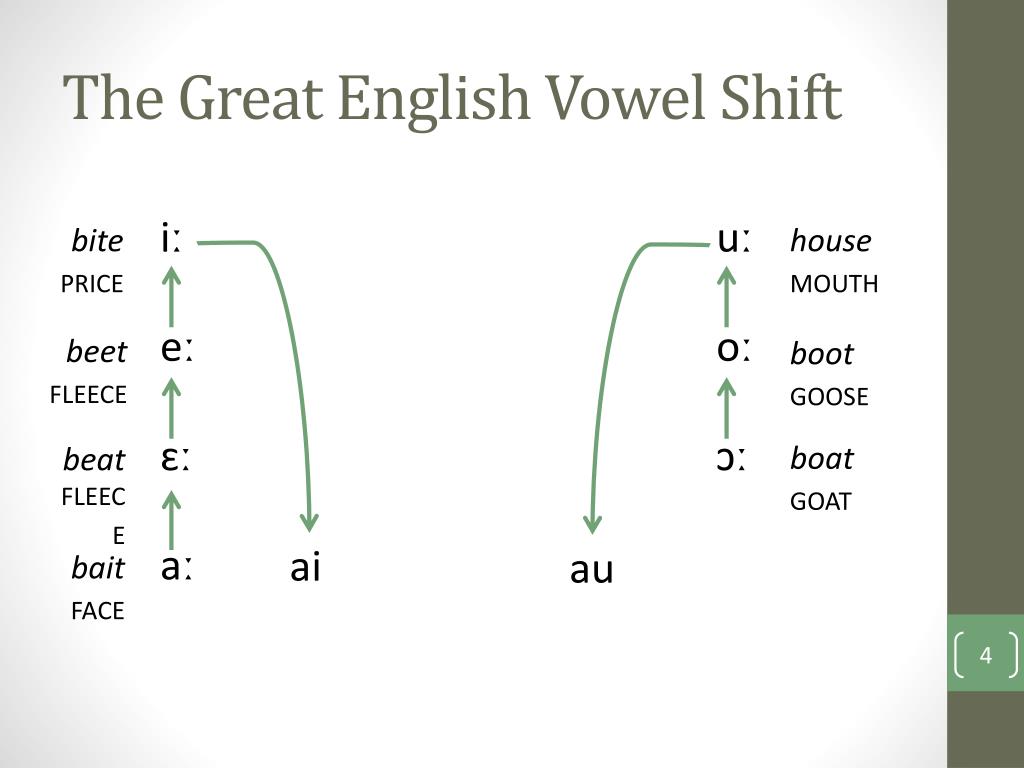
different vowel shifts are cool (pgs. 137-140)! Am I thinking correctly in
imagining them to become like the GVS we learned about in Intro. to
Linguistics? Will the vowels move enough to be completely new words so that the
dialects are extremely different in each region (so different that they cannot
be understood by outsiders)?